


6G news and analysis for the week ending Friday, 20th February, 2026.
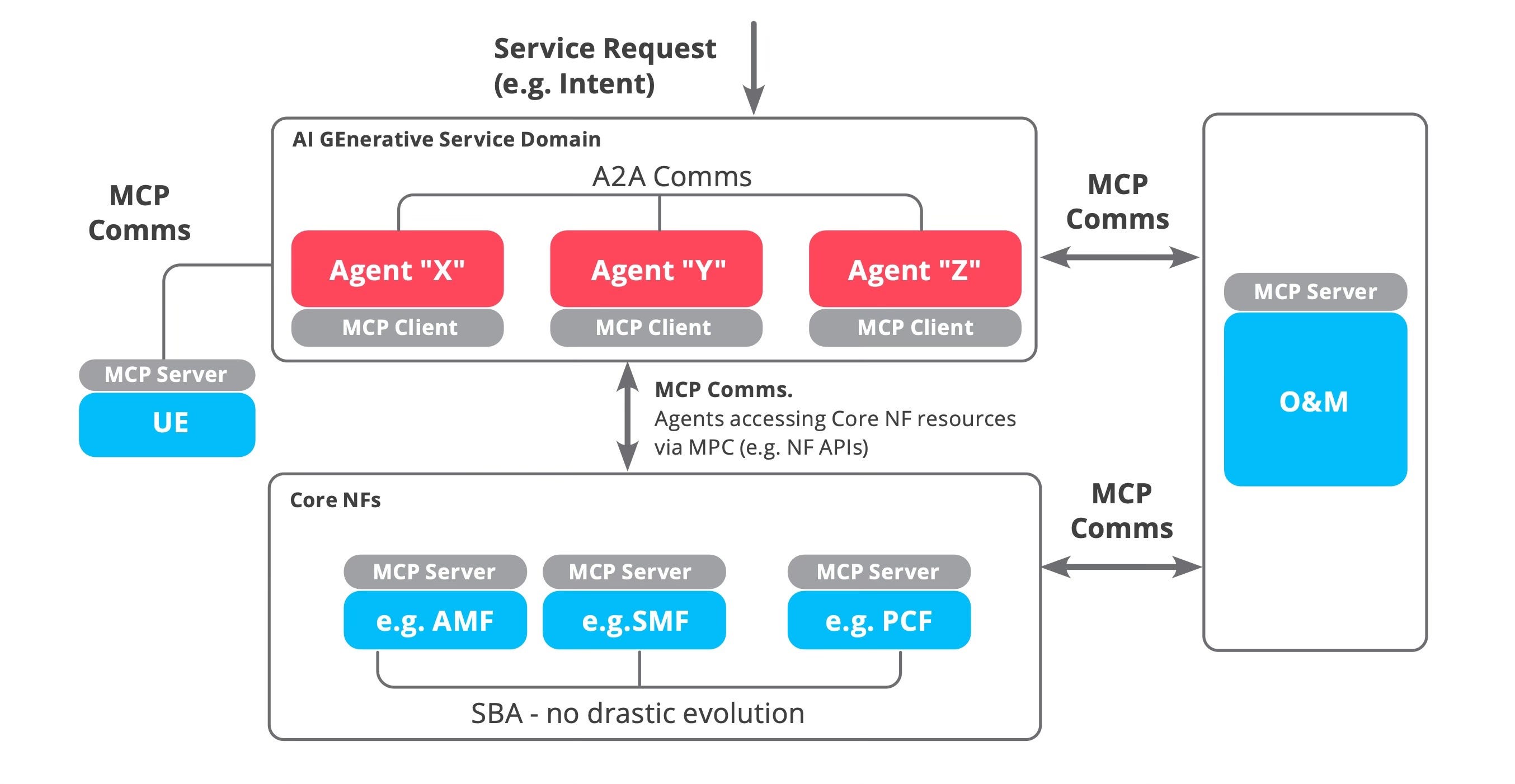
The NGMN Alliance has published its full “AI Surge and Its Implications for 6G” document, expanding on the liaison statement that divided the 3GPP CT#110 plenary in Baltimore last December. That debate saw stakeholders divided over whether CT working groups should begin studying AI agent protocols before upstream architecture decisions are settled. With CT#111 now just a few weeks away and CT working groups expected to bring their first 6G study items for plenary approval, the full NGMN report gives proponents of early AI/protocol exploration substantially more material to reference, including specific architectural proposals around agent-to-agent (A2A) communication and Model Context Protocol (MCP).
On spectrum, the EU’s Radio Spectrum Policy Group has published its Draft Opinion on a 6G Spectrum Roadmap, identifying the upper 6 GHz band as the primary frequency for launching mass-market 6G services in Europe by 2030. The document also flags the 7125–7250 MHz band for study at WRC-27 and encourages further research into spectrum sharing mechanisms. This builds on the RSPG’s November 2025 opinion favouring mobile over Wi-Fi in the upper 6 GHz band and represents the most detailed European spectrum blueprint for 6G to date.
Meanwhile, Samsung and KT have verified eXtreme MIMO (X-MIMO) technology in the 7 GHz band, achieving 3 Gbps peak downlink rates using ultra-high-density antennas with four times the density of current 5G systems. This outdoor field test in Seoul adds to the growing body of evidence that the 7 GHz band can deliver both the capacity and coverage that 6G demands.
Key announcements this week
NGMN delivers AI blueprint ahead of CT#111
NGMN Alliance has published its full “AI Surge and Its Implications for 6G” report, expanding on the liaison statement that triggered one of the most contentious debates at the 3GPP TSG CT#110 plenary in Baltimore last December. The report, approved by the NGMN Board, arrives just weeks before CT#111 in March, where CT working groups are expected to bring their first 6G study items for plenary approval.
At CT#110, the earlier NGMN liaison on this topic split the room. CMCC, Huawei and Deutsche Telekom argued CT working groups should receive the input to inform their 6G study item scoping. Vodafone, Verizon, Ericsson and Qualcomm countered that protocol work requires upstream architecture decisions from SA2 and that forwarding the liaison risked premature study activity. The NGMN report examines three dimensions: the impact of AI traffic on networks, what networks must do to support AI (”Network for AI”), and how AI should be embedded within 6G architecture (”AI for Network”). Its central argument is that 6G must be designed with flexibility as a cornerstone, given deep uncertainty about how AI-driven workloads will reshape traffic patterns.
On architecture, NGMN argues that 5G’s Service-Based Architecture (SBA) should be the starting point for 6G rather than a clean-slate redesign. The report explicitly calls for 6G to support A2A and agent-to-network communication, and identifies MCP as a potential mechanism for integrating AI agents with network functions. The Board sets out ten standardisation study recommendations, including end-to-end AI support across RAN, core and transport; interoperability and trust frameworks for multi-vendor AI agent deployments; flexible, token-based charging models; and reuse of emerging AI interfaces from sectors outside telecoms.
What’s new: The full report provides substantially more detail than the three-page liaison statement that was debated at CT#110. It includes architectural proposals showing how AI agents could interact with core network functions via MCP servers layered on top of the existing SBA. The ten specific standardisation recommendations give CT working groups concrete material to reference when scoping 6G study items.
Why this matters: NGMN is an operator-driven organisation whose views carry significant weight in 3GPP. The report arrives at a critical time: CT working groups missed their target to achieve consensus on any 6G study items at CT#110, making the March plenary the next opportunity. The detailed architectural proposals around A2A and MCP address precisely the topics that split the room in Baltimore. The report also flags that while AI applications have grown exponentially, their current impact on mobile network traffic remains modest. However, use cases like AR wearables, autonomous vehicles and AI agent swarms could fundamentally shift demand toward uplink-heavy, machine-oriented communication patterns.
Implications for 6G standards: The NGMN report strengthens the hand of those who want CT to begin studying AI agent protocols now rather than waiting for SA2 architecture decisions. The explicit references to A2A and MCP as candidate interfaces for 6G are notable because these protocols originate outside the traditional telecoms standards ecosystem.
View source material to read more
Europe publishes 6G spectrum roadmap
The EU’s Radio Spectrum Policy Group (RSPG) has published a Draft Opinion on a 6G Spectrum Roadmap, calling for comments with a deadline of 27 March 2026. The document, a follow-up to the RSPG Report on 6G Strategic Vision published in February 2025, aims to provide a clear assessment of spectrum availability and requirements while 6G is still in the early development phase. The RSPG stated the roadmap “has been developed to facilitate the launch of 6G on a large scale in Europe.”
The opinion identifies the upper 6 GHz band (6425–7125 MHz) as the primary band suitable for the introduction of 6G in Europe by 2030, because it can “enable implementation of 6G use cases that require more capacity than 5G services.” The RSPG also concludes that 6G can be implemented in all low, mid, and high frequency bands already harmonised for mobile broadband, including sub-1 GHz bands (700, 800 and 900 MHz), mid-bands (1500 MHz through to 3.6 GHz), and high bands (26 GHz and 42 GHz). The 7125–7250 MHz band is flagged for study at WRC-27.
What’s new: This is the most detailed European spectrum blueprint for 6G to date. It builds on the RSPG’s November 2025 opinion that recommended 540 MHz of the upper 6 GHz band for mobile operators, with 160 MHz frozen until WRC-27. The roadmap now recommends that vendors begin developing equipment supporting 6G technology across all identified frequency bands. The RSPG also emphasised that “spectrum sharing solutions” are becoming essential and encouraged further research into sharing mechanisms. Notably, the RSPG itself is set to be transformed into the Radio Spectrum Policy Body (RSPB) once the Digital Networks Act is adopted.
Why this matters: Spectrum certainty is a prerequisite for 6G equipment development and deployment planning. By identifying specific bands and recommending vendor equipment development, the RSPG is sending a clear market signal well ahead of the 2030 target. The emphasis on the upper 6 GHz band aligns with global momentum: WRC-23 identified this band for mobile use across EMEA, the Americas and Asia Pacific, though the ongoing tug-of-war with the Wi-Fi community has slowed implementation. The reference to sub-THz bands as “currently still a subject for research and long term studies” indicates these are unlikely to feature in early 6G deployments.
Implications for 6G standards: The roadmap aligns with the centimetre-wave frequency range that 3GPP is expected to standardise under FR3 for 6G. The emphasis on equipment development across all identified bands supports the multi-band strategy that featured in virtually every major vendor submission to the 3GPP 6G Workshop.
View source material to read more
Samsung and KT verify X-MIMO in the 7 GHz band

Samsung Electronics has announced the successful verification of eXtreme MIMO (X-MIMO) technology in the 7 GHz band, working with KT Corporation and Keysight Technologies. Outdoor field testing at Samsung’s Seoul R&D Campus demonstrated a peak downlink data rate of up to 3 Gbps. The breakthrough was enabled by ultra-high-density antenna technology that integrates four times the antenna density of current 5G systems into equipment of comparable size.
The testing used Samsung’s 6G base station prototype featuring 256 digital ports and Keysight’s 6G terminal testbed, with eight simultaneous data streams transmitted to a single user. JinGuk Jeong, EVP and Head of Advanced Communications Research Center at Samsung Research, said:
“We have demonstrated the potential for significant improvements in data rates for next-generation communications.”
What’s new: This is the first public verification of X-MIMO performance in the 7 GHz band using a prototype base station with 256 digital ports. X-MIMO achieves its performance by exploiting the shorter wavelengths at 7 GHz to pack significantly more antenna elements into the same physical form factor. Samsung and KT previously validated AI-RAN optimisation on a commercial network in December 2025; this latest result extends their collaboration into the antenna technology domain.
Why this matters: The 7 GHz band is emerging as the consensus “sweet spot” for 6G, offering a balance of coverage and capacity between the 5G 3.5 GHz band and millimetre-wave frequencies. Real-world performance data is essential for the regulatory decisions being made ahead of WRC-27. The 3 Gbps peak rate from a single user demonstrates that X-MIMO can deliver the capacity improvements that operators need from new spectrum. This adds to the 7 GHz band validation work already reported by SoftBank and Nokia in Tokyo’s Ginza district, building a global evidence base.
Implications for 6G standards: X-MIMO aligns with the “Extreme/Advanced MIMO” category that Samsungproposed in its 3GPP 6G Workshop submission under the branding “NeX-MIMO.” KT’s own workshop submission specifically called for prioritising the upper mid-band (7.125–8.4 GHz) for 6G RAN specifications. The 256-port prototype provides a reference design that could inform antenna configuration requirements in Release 21.
View source material to read more
Qualcomm CEO: AI agents will replace apps
Qualcomm President and CEO Cristiano Amon told the India AI Impact Summit that AI agents will become “the centre of digital life,” replacing apps as the primary interface between users and digital services. He said 6G will bring AI directly into telecom networks, marking the next major shift in connectivity. “I think we look at our smartphones as an inseparable device in most of our digital life. But now, that’s going to get replaced by an agent,” Amon said.
Amon argued that always-on devices will generate data that “far exceeds the publicly available internet data currently used to train AI models.” He cited connected glasses with cameras as an example of devices that would generate vast quantities of contextual data. He added that for AI agents to be useful, “they needed to be contextually aware of what is relevant to you.”
What’s new: Amon’s India Summit remarks extend the vision he outlined at Snapdragon Summit in September 2025, where he announced Qualcomm’s target for pre-commercial 6G devices by 2028. The new emphasis is on the scale of data generation from always-on wearable devices and the implication that this data will dwarf current internet training datasets.
Why this matters: Qualcomm is the company that must translate 6G specifications into the silicon that powers commercial devices. Its consistent messaging on AI agents, sensing networks and uplink-heavy traffic patterns is shaping how the industry thinks about 6G use cases. The emphasis on device-generated contextual data reinforces the traffic projections Qualcomm has previously published, showing that AI-driven use cases could fundamentally alter mobile network traffic patterns from downlink-heavy to uplink-dominant. The India context is significant given India’s active 6G spectrum consultations and the TSDSI role as a 3GPP Organisational Partner.
Implications for 6G standards: Qualcomm’s vision for AI agents that work across multiple devices, using voice, vision and text as natural interfaces, will need to be supported by the 6G specifications. The agent-centric model aligns with the NGMN report’s call for A2A and agent-to-network communication standards.
View source material to read more
Kyoto University achieves THz transmission at 1,000 km/h
A team at Kyoto University, led by Hiroshi Harada and Yusuke Koda, has developed a wireless transmission testbed that successfully transmitted ultra-wideband signals in the terahertz band under high-mobility emulation corresponding to speeds of up to approximately 1,000 km/h. The testbed uses software-defined radio technology and transmits signals approximately 20 times wider than the channel bandwidth currently allocated for 5G in Japan, while maintaining compliance with existing 5G standardised communication specifications.
When the assumed mobility speed was varied up to 1,000 km/h, conventional signal processing methods failed to achieve the required block error rate (BLER) threshold in the 700–1,000 km/h range. The newly developed signal processing method satisfied the required performance across all evaluated mobility conditions.
What’s new: Most THz-band communication experiments have been limited to stationary or low-mobility scenarios with non-standard waveforms. Kyoto University’s testbed is notable for two reasons: it maintains compliance with 5G standardised transmission schemes, and it demonstrates stable operation at mobility speeds relevant to high-speed rail and potentially non-terrestrial network scenarios. The 20x bandwidth increase over current 5G allocations addresses the fundamental 6G requirement for multi-gigahertz channel widths.
Why this matters: THz frequencies are a candidate for the extreme data rate scenarios in the IMT-2030 framework, but practical viability under mobility conditions has been an open question. This result demonstrates that with appropriate signal processing, THz communications can be maintained even in the most demanding mobility environments. The compliance with 5G standards is a pragmatic choice that eases the migration path.
Implications for 6G standards: While THz integration is likely to be addressed in later 3GPP releases rather than Release 20 or 21, this research provides evidence that THz-band operation is feasible for a broad range of scenarios, from fixed wireless access through to high-speed terrestrial and non-terrestrial applications.
View source material to read more
AIOTI and 6G-IA map energy-6G convergence
AIOTI, in collaboration with 6G-IA, has published a white paper on “Energy-6G Convergence: a Perspective,” examining how 6G can become a foundational enabler of future energy systems. The paper argues that 6G capabilities, including deterministic performance, massive scalability, AI-native operation and integrated sensing, closely align with the needs of modern energy systems. A central conclusion is that “observability, security, and sustainability are pre-requisites for trust.”
The paper covers 6G features relevant to energy systems, application areas including smart grids and industrial energy management, KPIs and Key Value Indicators (KVIs), and the challenges of converging 6G with energy infrastructure. It warns that 6G must evolve “in coexistence with legacy systems, through phased deployment and rigorous validation, rather than disruptive replacement.”
We missed this when it was first published on the AIOTI blog at the end of December, but better late than never.... h/t to WIOT for bringing it to our attention.
What’s new: This is one of the first detailed examinations of 6G’s role in the energy sector from a European institutional perspective. The emphasis on KVIs alongside traditional KPIs reflects the growing recognition that 6G must deliver measurable societal value beyond technical performance. The paper’s call for standardised energy and carbon metrics that link communication services to measurable energy-system outcomes is a concrete recommendation that could influence standards work.
Why this matters: The energy sector represents one of the most demanding verticals for 6G, requiring safety-critical reliability, long asset lifetimes and stringent sustainability requirements. If 6G cannot credibly demonstrate its contribution to the energy transition, it risks losing a significant vertical market. The paper’s warning that “if energy and digital infrastructures evolve independently, Europe risks inefficiencies, fragility, and loss of technological sovereignty” frames the convergence as a strategic imperative.
Implications for 6G standards: The requirements for deterministic performance, zero-trust security and energy-proportional network operation map directly onto active 3GPP study areas. The call for energy and carbon observability as intrinsic network properties could influence the sustainability-by-design frameworks being developed for 6G.
View source material to read more
Selected research papers published this week
Agentic AI proposed for 6G physical layer
Zhaoyang Li and colleagues present a framework for “agentic wireless communication” in 6G, where LLM-based agents autonomously perceive user intent, make decisions and execute network configurations. The paper argues that user requirements are no longer captured by a single metric such as throughput, but by multi-dimensional objectives including latency sensitivity, energy preference and computational constraints. A case study demonstrates an intent-driven link decision agent called AgenCom that adaptively constructs communication links.
Why this matters: This paper connects the agentic AI concepts being debated in 3GPP’s core network discussions to the physical layer. The shift from rule-based control to intent-driven autonomy at the radio level would represent a fundamental change in how wireless networks operate and aligns with the broader push for AI-native 6G architectures.
View source material to read more
Semantic communication tackles multi-user MIMO
Chongyang Li and colleagues propose a scenario-adaptive semantic communication framework for multi-user MIMO-OFDM systems. The design uses an asymmetric neural network architecture with a scenario-aware encoder at the transmitter and a lightweight decoder at the receiver, validated over 3GPP channel models. Results show significant gains over conventional coding schemes, particularly in low signal-to-noise conditions.
Why this matters: Semantic communication, which transmits task-relevant meaning rather than raw bits, is a candidate technology for 6G. This paper addresses a practical gap by extending the concept from simple point-to-point links to realistic multi-user scenarios with interference and frequency-selective fading.
View source material to read more
Quantum-hybrid approach solves massive connectivity
Japan’s National Institute of Information and Communications Technology (NICT) has demonstrated a hybrid signal processing method that integrates quantum annealing with classical computing for next-generation base stations. Outdoor experiments achieved simultaneous communication with 10 devices, addressing the combinatorial optimisation problem in multi-antenna, multi-carrier signal detection. The work was presented at IEEE CCNC 2026.
Why this matters: Massive connectivity, supporting potentially millions of devices per square kilometre, is a core 6G requirement. As device density increases, the signal detection problem becomes computationally intractable for classical methods alone. NICT’s quantum-hybrid approach offers a potential path to solving this scaling challenge for machine-type communications.
View source material to read more
Federated data spaces designed for 6G
Dimitrios Amaxilatis and colleagues present the 6G-DALI project’s architecture for secure, interoperable data spaces supporting AI-driven 6G services. Built on GAIA-X and International Data Spaces Association (IDSA) principles, the architecture incorporates federated identity management, policy-based data contracts and automated data pipelines for cross-domain data sharing.
Why this matters: As 6G networks become platforms for AI-driven services, the ability to share training data securely across organisational boundaries becomes critical. This paper addresses the trust and governance frameworks that will be needed for federated AI in telecoms.