


6G news and analysis for the week up to Thursday 5th March, 2026.
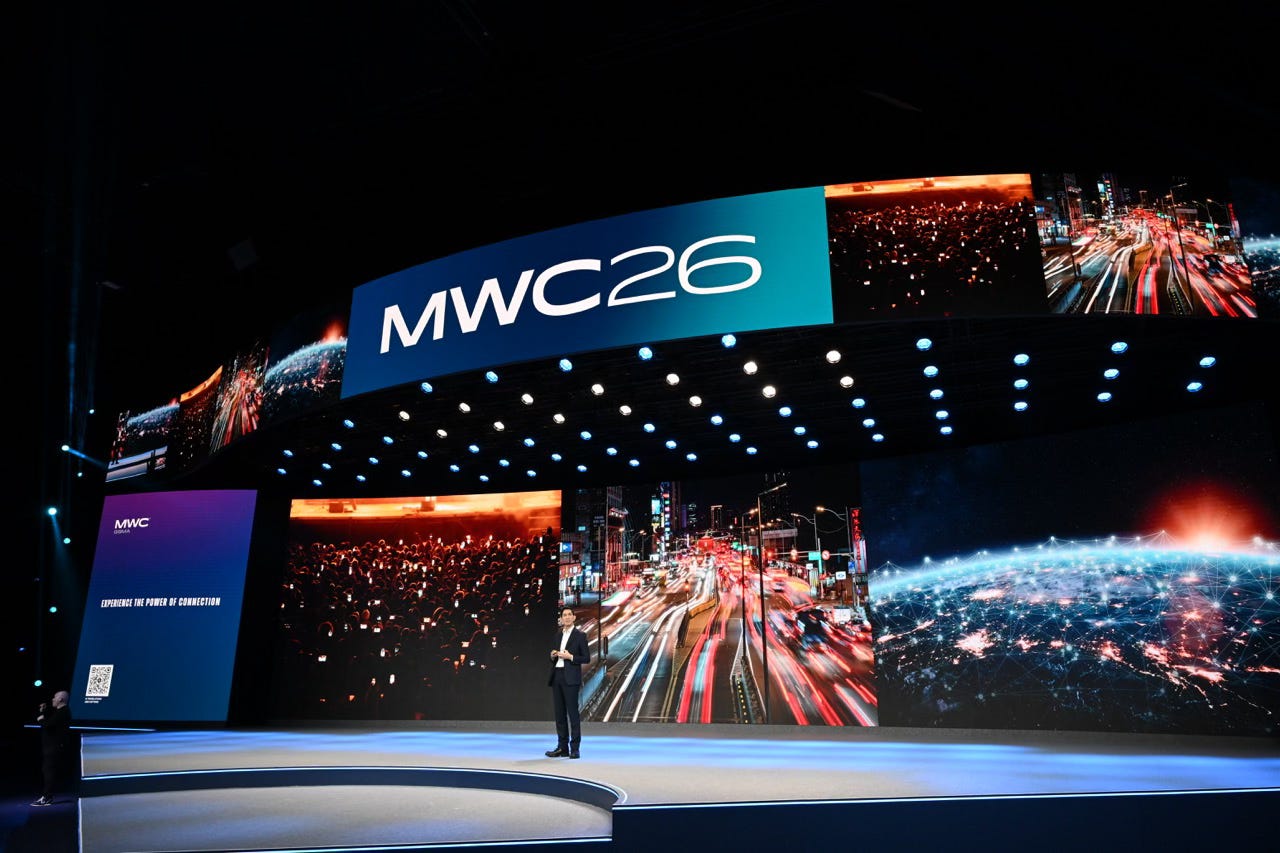
Mobile World Congress is over for another year. As expected, there was plenty of 6G-related new, so many in fact that we are compiling two newsletters this week. Let’s start by picking over the most significant and long-term announcements.
The headline move came from Qualcomm, which unveiled a strategic coalition of more than 40 global partners, which spanned operators, hyperscalers, device manufacturers and automotive companies. The influential vendor and its partners have committed to a milestone-driven roadmap with commercial 6G systems targeted from 2029 onwards. Qualcomm is talking about specification-compliant, pre-commercial devices and networks demonstrated in 2028, which means the industry’s most important chipset maker believes 3GPP Release timelines are holding firm.
NVIDIA made a parallel move, assembling a coalition including BT Group, Deutsche Telekom, Ericsson, Nokia, SK Telecom, SoftBank and T-Mobile around a commitment to build 6G on AI-native, open, software-defined platforms. Jensen Huang’s framing of telecoms as the next frontier for AI infrastructure investment underscores how the AI and connectivity agendas are becoming if not inseparable then at least very closely bound.
Meanwhile, Ericsson completed what it calls the world’s first pre-standard 6G over-the-air session at its Texas headquarters, using 7 GHz spectrum with a 400 MHz carrier bandwidth. The trial attracted a direct endorsement from US Secretary of Commerce Howard Lutnick. Impressive as the milestone is, it also feeds into a pattern of US moves – including the NTIA’s Olympics-related “Mission LA 2028” initiative – that raises a cautionary question: is the industry heading toward a repeat of AT&T’s “5G E” branding controversy, where marketing outpaces standards?
Rounding out the week, the Global Coalition on Telecoms (GCOT), comprising seven allied governments, launched landmark 6G Security and Resilience Principles at MWC, backed by 20 industry endorsers. It is not the most headline-grabbing announcement, but embedding security into 6G foundations before standards are finalised is a quietly significant development.
Qualcomm builds massive 6G commercialisation coalition
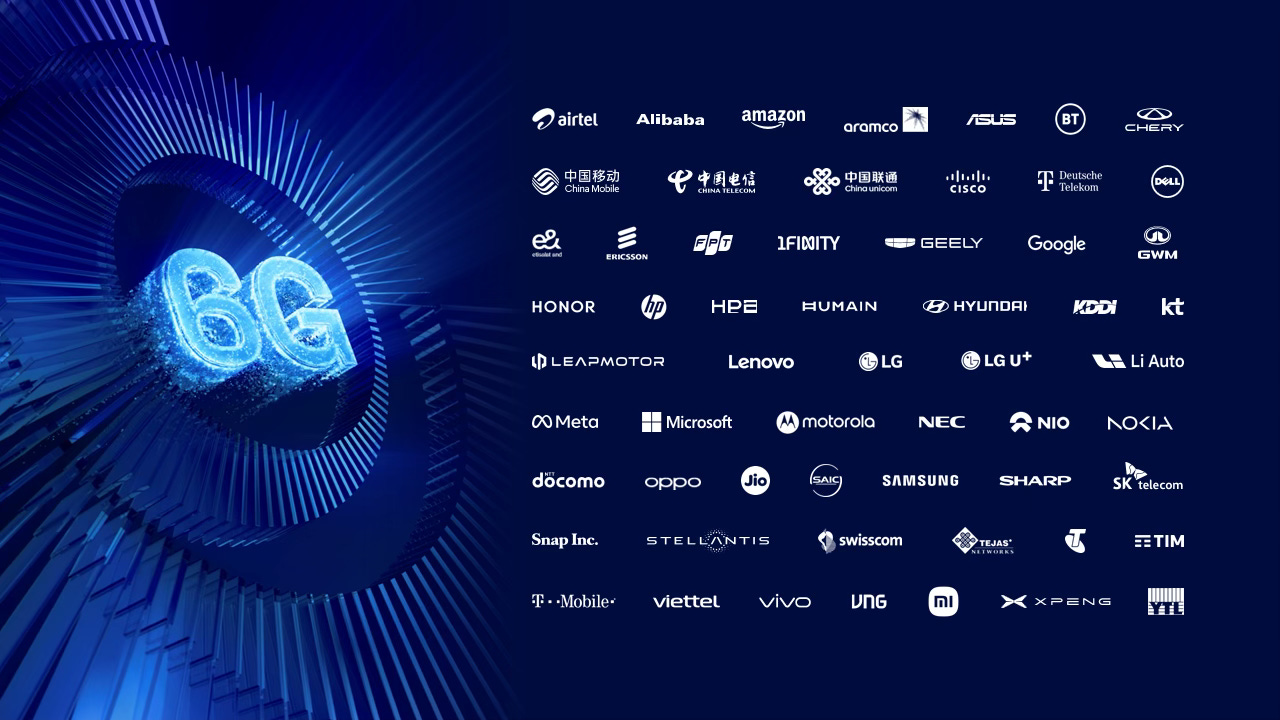
Qualcomm announced a strategic coalition with more than 40 leading industry partners to accelerate 6G development and global deployment. The collaboration establishes a milestone-driven roadmap focused on delivering commercial 6G systems from 2029 onwards. Global partners include Airtel, Amazon, BT Group, Cisco, Dell, Ericsson, Google, HP, KDDI, Meta, Microsoft, Nokia, NTT DOCOMO, Reliance Jio, Samsung, SK Telecom, T-Mobile and many others. Cristiano Amon, President and CEO of Qualcomm, said:
“6G is more than the next step in wireless evolution. It is the foundation for an AI-native future that distributes intelligence across devices, the edge, and the cloud.”
What’s new: The coalition goes well beyond previous Qualcomm announcements. It commits partners to a specific timeline: demonstration of specification-compliant, pre-commercial devices and networks in 2028, establishment of a common 6G readiness benchmark, and initial rollout of global, interoperable commercial systems from 2029. The scope spans three architectural domains: devices, networks and cloud infrastructure, reflecting Qualcomm’s positioning of 6G as a device-to-data-centre transformation. The partner list is notable for its breadth, including hyperscalers (Amazon, Google, Microsoft, Meta), automotive OEMs (Stellantis), and a second tier of aligned partners that includes China Mobile, China Telecom, China Unicom, Huawei and Xiaomi – a significant geopolitical span.
Why this matters: Qualcomm is the leading company that must translate the 6G specifications into commercial silicon. When it commits to pre-commercial devices in 2028, it is effectively stating that 3GPP Release 21 will contain sufficient specification detail by that point to support prototype chipsets. The September 2025 Snapdragon Summit promise of “pre-commercial devices with 6G as early as 2028” has now evolved from a CEO keynote statement into a structured industry commitment with named partners. The inclusion of hyperscalers alongside traditional telecoms partners reinforces the shift from 6G as a connectivity upgrade to 6G as an AI-native compute platform. The coalition’s emphasis on “new business models and services” reflects the monetisation imperative highlighted by the TM Forum white paper covered in last week’s newsletter.
Implications for 6G standards: Qualcomm’s longstanding advocacy for “lean specifications” and “minimising number of options” (as stated in its 3GPP Workshop submission) now has an industry coalition behind it. The 2028 demonstration target implies that key 6G radio interface decisions in 3GPP RAN1 need to stabilise within the next 18 months. The device-to-data-centre framing also suggests Qualcomm will push hard for standardised AI-native protocols in the RAN and core.
View source material to read more
NVIDIA unites telecoms leaders on AI-native 6G platforms

NVIDIA announced a joint commitment with Booz Allen, BT Group, Cisco, Deutsche Telekom, Ericsson, MITRE, Nokia, OCUDU Ecosystem Foundation, ODC, SK Telecom, SoftBank and T-Mobile to build 6G on AI-native, open, secure and trustworthy platforms. The announcement was made at MWC Barcelona 2026. Jensen Huang, founder and CEO of NVIDIA, said:
“AI is redefining computing and driving the largest infrastructure buildout in human history – and telecommunications is next.”
What’s new: This commitment brings together operators and infrastructure vendors under NVIDIA’s AI-RAN vision, explicitly positioning 6G networks as infrastructure for “physical AI” – enabling autonomous machines, vehicles, sensors and robots. The initiative ties together several strands: NVIDIA’s membership of the OCUDU initiative (the US DoD-backed open-source AI-RAN project first covered in this newsletter in October 2025), the AI-RAN Alliance (now with over 130 members), and the AI-WIN all-American AI-RAN stack launched last October. New government engagements in Korea, the UK and across Europe extend the reach beyond the US ecosystem. NVIDIA’s Ronnie Vasishta, Senior Vice President of Telecom, explicitly framed this as building “AI-RAN platforms that translate these guiding principles into operational reality.”
Why this matters: NVIDIA has been methodically building its position in telecoms for several years. Its 3GPP 6G Workshop submission argued that “relying solely on bit transport confines telecoms operators to the role of dumb pipes” and proposed AI-RAN as the convergence of communication and computing on shared GPU infrastructure. This MWC announcement converts that vision into an industry-wide commitment. The participation of Deutsche Telekom CEO Tim Höttges, BT Group CEO Allison Kirkby and T-Mobile CEO Srini Gopalan at CEO level signals that major operators view NVIDIA’s AI-RAN architecture as central to their 6G strategies, not merely a vendor technology option. The NTIA’s Arielle Roth described the coalition as evidence that “the United States and our allies and partners around the world are leading in this next-generation technology.”
Implications for 6G standards: The push for software-defined, AI-native, open platforms directly aligns with the 3GPP consensus around standalone architecture from day one and AI-native design principles. However, the degree to which GPU-based RAN processing and AI workload co-location become standardised, versus remaining implementation choices, is an open question. The OCUDU Foundation’s involvement suggests open-source reference implementations could accelerate the path from concept to interoperable specification.
View source material to read more
Ericsson completes 6G OTA trial in Texas, but a familiar pattern is emerging
Ericsson announced it has completed what it describes as the world’s first pre-standard 6G over-the-air session, conducted at its US headquarters in Plano, Texas. The trial used 7 GHz spectrum with a 400 MHz carrier bandwidth to demonstrate AI robotics control and real-time video streaming using a cloud-native, AI-native architecture. Börje Ekholm, President and CEO of Ericsson, said:
“Completing this world’s first live 6G trial in the United States is a tangible proof point that advanced wireless innovation, manufacturing, and research is anchored here.”
US Secretary of Commerce Howard Lutnick added:
“Ericsson’s 6G demonstration is an important milestone in next generation wireless innovation, enabled by American ingenuity.”
What’s new: The system uses a pre-standard 6G stack operating in the 7 GHz range, with radio hardware, RAN compute, software-defined air interfaces and cloud platforms. Ericsson highlighted that its software architecture is deployable on both CPU and GPU platforms. The demonstration powered AI-driven robotics with low-latency connectivity and real-time video streaming. Ericsson confirmed it will manufacture next-generation 6G equipment at its 5G Smart Factory in Lewisville, Texas, building on a $150 million investment and more than 550 US manufacturing jobs.
Why this matters: The trial validates key 6G building blocks in the 7 GHz band, which is central to the emerging global spectrum consensus for 6G. This complements the SoftBank/Nokia 7 GHz trials in Tokyo’s Ginza district reported in January. However, the framing deserves scrutiny. The trial sits within a broader pattern of US 6G positioning that includes the NTIA’s “Mission LA 2028” initiative, which aims to demonstrate 6G breakthroughs at the Los Angeles Olympics using pre-standards technology. The NTIA is mandated to finish studies on the 7.125–7.4 GHz band by end of 2026. Combined with Qualcomm’s 2028–2029 timeline and the political endorsement from the US Secretary of Commerce, the industry appears to be building toward branded “6G” showcases ahead of finalised global standards.
Implications for 6G standards: The 7 GHz spectrum and 400 MHz carrier bandwidth are consistent with the FR3 (7–24 GHz) band that featured prominently in 3GPP 6G Workshop submissions. Ericsson’s ongoing contributions to 3GPP and Open RAN are cited. But there is a risk here: if pre-standard US demonstrations are marketed as “6G” before 3GPP Release 21 specifications are complete, the industry could repeat the “5G Evolution” episode where AT&T’s branded 4G LTE-Advanced as “5G E” in 2018, triggering lawsuits and industry friction. The technical work is legitimate and important. The question is whether commercial and political pressures will push the label ahead of the substance.
View source material to read more
Seven governments launch 6G security principles
The Global Coalition on Telecoms (GCOT), comprising the UK, US, Canada, Japan, Australia, and newly joined Sweden and Finland, launched landmark “6G Security and Resilience Principles” at MWC 2026. The principles have received endorsement from 20 industry partners, including AT&T, BT, Ericsson, Nokia, NVIDIA, Qualcomm, Samsung, Vodafone and others. Gabriela Styf Sjoman, Managing Director of Research and Commercialisation at BT Group, said:
“These principles will guide our approach as we help define the standards, technologies and partnerships that will underpin the evolution of 6G.”
Marco Zangani, Director of Network Strategy and Architecture at Vodafone Group, added:
“This work is essential to protecting customers from emerging cyber threats and strengthening the resilience of our networks.”
What’s new: The principles set out what seven allied governments want to see from industry in terms of 6G security and resilience, covering protection from cyber and physical threats, resilient supply chains and continuous reliable service. Sweden and Finland joined the coalition at MWC, bringing two countries with deep telecoms infrastructure roots (Ericsson and Nokia respectively) into the fold. The GCOT has indicated these principles should serve as a “touchstone” for future 6G standards development and inform industry R&D. This builds on existing GCOT work on AI and Open RAN certification.
Why this matters: Security by design has been a recurring theme in 6G discussions, with 3GPP SA3 already beginning its 6G security studies. The GCOT principles are significant because they represent a coordinated position from allied governments (specifically excluding China and Russia) on what security and resilience should look like in next-generation networks. The addition of Sweden and Finland is symbolically important, bringing the home countries of Ericsson and Nokia into a coalition that explicitly frames 6G security in terms of trusted supply chains and trusted vendors. Rob Joyce of Virgin Media O2 noted that “although the commercial launch of 6G networks is some years away, it is helpful to establish at an early stage the principles that will guide the development of 6G.”
Implications for 6G standards: The principles are positioned to influence 3GPP security specifications and vendor R&D investment. The GCOT’s stated intention to use the principles to “identify opportunities for collaboration in industry’s development of technical standards” suggests these governments will be actively steering security requirements through the standards process. The geopolitical dimension – a seven-nation coalition of US-allied democracies setting 6G security expectations – mirrors the broader trusted-vendor debates that shaped late-era 5G procurement decisions.
View source material to read more
6G Futures will return tomorrow with a comprehensive round-up of other 6G-related news from MWC and beyond.