


6G news and analysis for the week ending Friday, 17th April, 2026.
Hello again and welcome to our new subscribers. An interesting week with some diverse developments to cover, many of which link back to earlier announcements (which was always the long-term goal of this Substack). The most significant was a collective one. Seven major Asia-Pacific operators and 6G alliances signed the Tokyo Accord at the GSMA Digital Nation Summit, committing to a shared vision for 6G cooperation spanning AI-native networks, edge computing and digital trust. The signatories represent a substantial concentration of regional influence, suggesting that 6G cooperation is overriding traditional competitive boundaries, at least at the pre-standards level.
Over in the US, the NTIA announced that the technical review of federal agency relocation plans for the 2.7 GHz band has been approved, clearing a key milestone in the process of repurposing the band for full-power commercial licensed use. This builds on President Trump’s December 2025 “Winning the 6G Race” memorandum, which directed studies on the 2.69–2.9 GHz band alongside the 7.125–7.4 GHz band. The 2.7 GHz range offers an attractive combination of coverage and capacity for next-generation networks, and the approval triggers a 60-day Congressional review before funding can be released.
Elsewhere, Brazil’s CPQD launched a 36-month open network research project for 6G, Hong Kong’s CityUHK partnered with China Coal Technology and Engineering Group to apply 6G and terahertz technologies to coal mine safety, and Zimbabwe hosted a discussion on the human capital challenges of the 6G transition. Five research papers round out the week, covering topics from FR3 vehicular channel modelling to liquid crystal antenna beamforming and AI-native network architecture. Enjoy!
Key announcements this week
APAC operators sign Tokyo Accord for 6G

Japan’s four mobile network operators (NTT DOCOMO, KDDI, Rakuten Mobile and SoftBank) have signed the Tokyo Accord alongside LG Uplus of South Korea, Globe of the Philippines and the three APAC 6G Alliances at the GSMA Digital Nation Summit Tokyo. The accord establishes a cooperation framework for next-generation communications that encompasses standardisation, AI network evolution and new business model development. The GSMA simultaneously published a report, Digital Nations 2026: Accelerating the Digital Leap in Japan, urging the country to translate its technical strengths into global digital leadership. Lee Sang-yup, CTO of LG Uplus, said:
“Starting with this Tokyo Accord, we will strengthen cooperation with Japanese carriers, including KDDI and NTT Docomo, and jointly prepare for the upcoming 6G AI network.”
Julian Gorman, Head of Asia Pacific at GSMA, added:
“The challenge now is execution. This week’s Digital Nation Summit provides an important moment for policymakers and industry leaders to align the actions needed to translate technical leadership into real economic and societal outcomes.”
What’s new: The Tokyo Accord goes beyond bilateral technology exchanges. Participating companies agreed to establish core principles including fostering an open digital ecosystem, accelerating digital transformation across industries and building transnational digital trust. The accord is described as embodying a network vision for a sustainable digital society where 6G and AI are combined. Additional operators are expected to join through future Digital Nations Summits.
Why this matters: Japan’s four operators rarely act in concert, making the joint signing significant. The GSMA report identifies three urgent priorities: completing 5G Standalone deployment (which remains uneven in Japan), closing the “grey digital divide” (with internet usage dropping to 25.6% among those over 80) and strengthening digital trust (fraud losses reached ¥324.1 billion in 2025). The report positions 2026 as a critical inflection point, noting that while Japan has mitigated METI’s “digital cliff” risks, structural challenges in productivity and digital services remain. The inclusion of LG Uplus alongside Japanese carriers elevates the cross-border dimension. LG Uplus signed a separate 6G R&D agreement with LG Electronics just two weeks ago, covering semantic communication and post-quantum cryptography. Its CTO, Lee Sang-yup, is now building a web of bilateral and multilateral 6G partnerships across the region.
Implications for 6G standards: The emphasis on open, interoperable platforms and AI-native network architecture maps onto active Release 20 study items. The accord’s standardisation cooperation dimension suggests coordinated contributions to 3GPP from the APAC region, potentially strengthening the collective voice of Asian operators in shaping Release 21 specifications.
View source material to read more — GSMA
View source material to read more — LG Uplus
US clears key milestone for 2.7 GHz 6G spectrum
The National Telecommunications and Information Administration (NTIA) announced that the Spectrum Relocation Fund Technical Panel has approved federal agency relocation plans for the 2.7 GHz band (2.69–2.9 GHz), clearing a key step toward repurposing the band for full-power commercial licensed use. NTIA Administrator Arielle Roth said:
“NTIA is executing on that mandate with urgency. This milestone brings us one step closer to ensuring the American people realize the full benefit of this spectrum.”
What’s new: The Technical Panel’s approval, which includes representatives from NTIA, the Office of Management and Budget (OMB) and the FCC, establishes an executable roadmap for the engineering studies required before spectrum can be repurposed. OMB will now notify Congress, triggering a 60-day review period before funding can be released from the Spectrum Relocation Fund. The two primary federal incumbents, NOAA and the FAA, will incorporate spectrum repurposing into their ongoing procurement of modernised radar systems, maintaining aviation safety and weather monitoring while improving spectral efficiency.
Why this matters: This is the latest in a series of accelerating US spectrum actions following President Trump’s December 2025 “Winning the 6G Race” memorandum, which we covered at the time. That memorandum directed studies on this band alongside the 7.125–7.4 GHz range. The 2.7 GHz band offers a combination of coverage and capacity that makes it attractive for next-generation mobile services — signals in this range can cover entire neighbourhoods including indoors, while supporting the large contiguous channels needed for high-throughput applications. The NTIA explicitly frames this as advancing US 6G leadership. It is worth noting that while the spectrum action is substantive, the 2.7 GHz band is primarily a capacity band for future mobile networks generally, not exclusively a “6G” band. There is a political narrative at play here, alongside a legitimate technical process.
Implications for 6G standards: The 2.7 GHz band sits below the primary upper mid-band frequencies (7–24 GHz) that 3GPP is expected to standardise as FR3 for 6G, but it complements that spectrum by providing a coverage layer. A research paper covered in our 20 March edition measured spectral availability in this band from 2022 to 2025 and found usable spectrum dropped significantly between years, highlighting the practical challenges of repurposing shared federal spectrum. The relocation approach, rather than sharing, should address this variability.
View source material to read more
Brazil’s CPQD launches open network project for 6G
CPQD (Centro de Pesquisa e Desenvolvimento em Telecomunicações), Brazil’s leading telecoms research centre, has launched the ERA 6G (Evolution in Open Networks towards 6G) project. Funded by the Fund for the Technological Development of Telecommunications (Funttel) and supported by the Ministry of Communications, the 36-month initiative aims to develop open, disaggregated and programmable mobile infrastructure for future networks. The story was reported by Telesíntese. Rodrigo Poncio, Telecom Manager at CPQD, said:
“The great challenge is to democratize connectivity. To bring digital inclusion to the most remote parts of the country, we need cheaper and less complex networks.”
What’s new: ERA 6G will develop an architecture with native AI for network management, build prototypes of virtualised functions and create proof-of-concept projects in urban, rural and industrial environments. The project emphasises modular, open architecture designed for gradual expansion according to demand, reducing the need for high initial capital investment. AI agents will be used for spectrum negotiation, dynamic slice rescheduling and energy management, alongside real-time cybersecurity threat identification.
Why this matters: Brazil is Latin America’s largest telecoms market but faces persistent connectivity gaps in rural and remote regions. The ERA 6G project directly addresses this by designing infrastructure for lower-cost deployment from the outset. The focus on disaggregated, modular networks echoes the broader global direction but with an emphasis on connectivity inclusion. CPQD has been a consistent contributor to the international 6G discussion. Notably, a Brazilian research team recently proposed the ORION O-RAN-compliant intent orchestration framework covered in our 6 March edition. The project’s government backing through Funttel signals that Brazil is formalising its 6G preparation at the national policy level.
Implications for 6G standards: The emphasis on open and disaggregated architecture aligns with the direction of O-RAN specifications and 3GPP’s ongoing work on cloud-native and AI-native network functions. Brazil’s Vivo (part of Telefónica) submitted a detailed vision to the 2025 3GPP 6G Workshop, and government-funded domestic R&D could strengthen the country’s contributions through its organisational partner.
View source material to read more
CityUHK targets 6G for coal mine safety
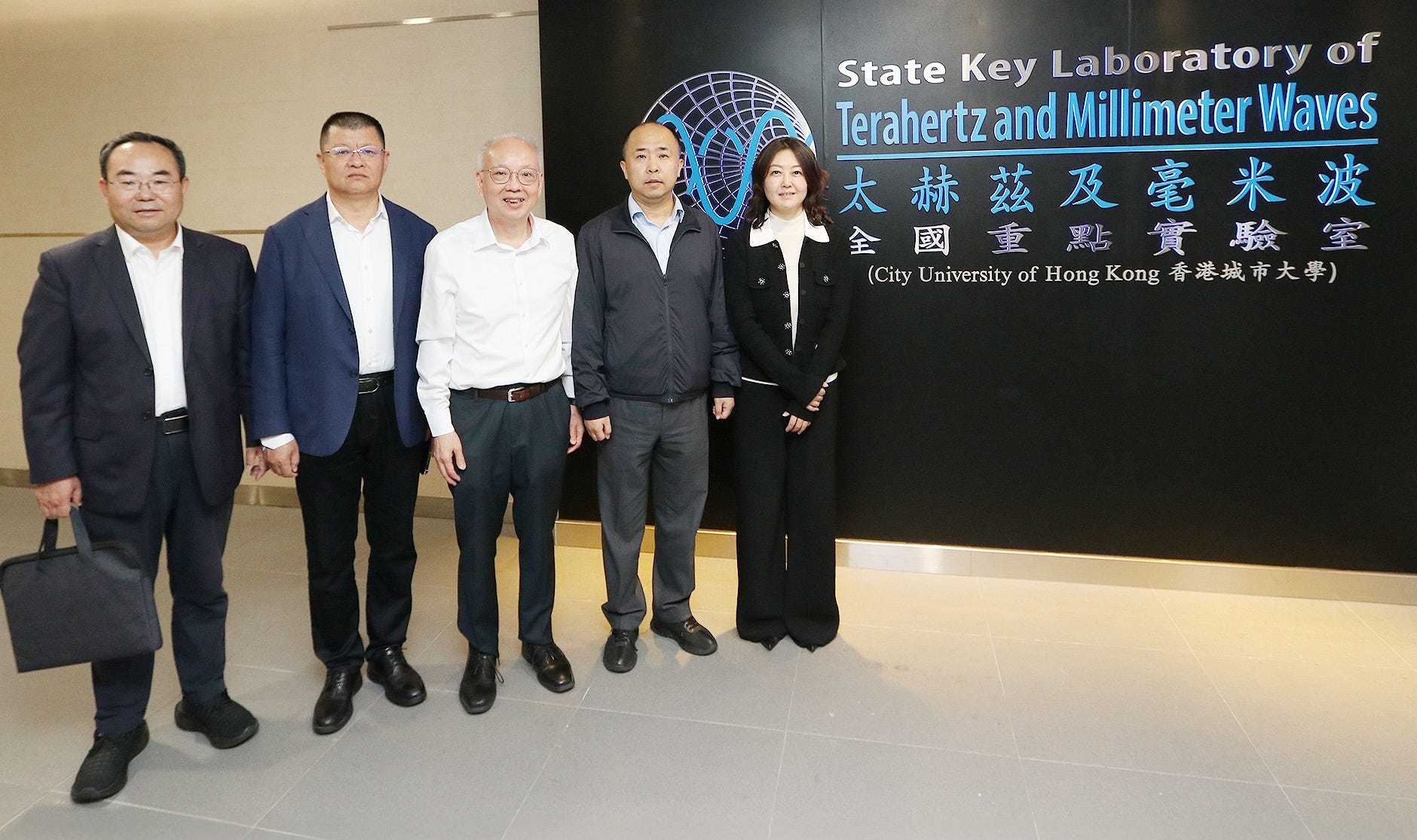
City University of Hong Kong (CityUHK) and the China Coal Technology and Engineering Group (CCTEG) have signed two memoranda of understanding to apply 6G communication and intelligent technologies to enhance safety in the mining industry. The partnership involves CityUHK’s State Key Laboratory of Terahertz and Millimeter Waves (SKLTMW) and will focus on adapting surface-level 6G and terahertz technologies for extreme underground environments. Professor Freddy Boey, CityUHK President, said:
“This collaboration synergises CityUHK’s top-tier research capabilities with CCTEG’s practical experience. By focusing on frontiers such as AI, new materials, green energy and highly reliable communications, we aim to jointly promote safety and sustainability in the industry.”
What’s new: The collaboration will encompass communications networks, integrated sensing and communications (ISAC), AI, Web3.0 and next-generation antenna technologies. A key research challenge is that signal propagation characteristics in deep mines differ substantially from surface environments, with significant electromagnetic interference during mining operations. Professor Chan Chi-hou, Director of the SKLTMW, noted that the partnership will focus on optimising antenna coverage and mitigating noise to enhance communication stability underground. Both parties are exploring the establishment of a joint laboratory.
Why this matters: Industrial vertical use cases are frequently cited in 6G visions but rarely backed by specific partnerships that address concrete operational problems. The mining sector has long been regarded as one of the prime “private network” use cases for 5G and 5G SA. Mining is one of the most demanding connectivity environments, with deep underground operations creating extreme channel conditions that current communications technologies cannot adequately address. CCTEG is responsible for the design of more than 80% of China’s mines and over 85% of industry standards, giving the partnership direct access to real-world deployment environments. The application of terahertz and ISAC technologies to mine safety represents a genuine industrial use case rather than the speculative scenarios that often accompany 6G announcements.
Implications for 6G standards: While mining-specific requirements are unlikely to drive 3GPP specifications directly, the extreme propagation and interference challenges in underground environments could inform channel modelling and reliability requirements in Release 21. The ISAC capabilities being researched here align with active study items in 3GPP RAN.
View source material to read more
Zimbabwe calls for human capital focus in 6G
Zimbabwe’s Postal and Telecommunications Regulatory Authority (Potraz) hosted a panel discussion on 6G readiness at its 2026 Innovation Product Launch and Business Expo in Bulawayo. The Zimbabwe Herald reported that Leonard Jukwa, Chief Systems Engineer at the Ministry of Information Communication Technology, argued that human capital should be treated as a “strategic multiplier” in the transition to 6G. In the news article, Jukwa said: “We should move away from just AI literacy or 5G and 6G literacy and move into the doing of things, AI engineering.”
What’s new: The discussion covered several policy areas rarely addressed in mainstream 6G coverage: the need for spectrum licensing frameworks that promote AI-powered 6G systems rather than treating spectrum allocation as a standalone exercise; the case for a national digital foresight unit to plan on 36- and 60-month horizons; and the importance of breaking down regulatory silos between sandboxes, licensing and broader digital policy. Zimbabwe has published a National Artificial Intelligence Strategy 2026–2030, but the panellists argued that institutional structures need to be created to translate strategy into action.
Why this matters: The 6G discussion is overwhelmingly dominated by the US, Europe, East Asia and the Gulf states. Hearing from regulators and policymakers in sub-Saharan Africa is a valuable reminder that 6G will only deliver on its promise of universal connectivity if developing nations are actively preparing. The emphasis on human capital rather than technology procurement shows that the skills gap is just as significant a barrier as the infrastructure gap. The call to “re-engineer” rather than simply “adopt” technologies is interesting, as it positions developing nations as active participants in the 6G ecosystem rather than passive recipients.
Implications for 6G standards: 3GPP’s membership is heavily concentrated in North America, Europe and East Asia. The perspectives voiced in Bulawayo are unlikely to shape specifications directly, but they underscore the importance of the ITU’s broader IMT-2030 framework in ensuring that 6G standards accommodate the deployment realities of emerging markets.
View source material to read more
Before we get to this week’s selection of research papers, a follow up to last week’s HAPS coverage (in the weekly and the special deep dive). HAPS specialist Sceye announced on Monday that its SE2 craft had traveled over 6,400 miles in the stratosphere from New Mexico to the coast of Brazil, marking a record flight time of over 12 days, including over 88 hours staying over one specific area of operation. I remain sceptical about HAPS in the initial 6G specification release work, but there is a potential role for it to play. I’m looking at the sovereignty implications of HAPS and will update 6G Futures if I find any useful data.
Selected research papers published this week
FR3 channel modelling for urban vehicle-to-base links
Fahimeh Aghaei and colleagues used ray tracing to model downlink propagation for Cellular Vehicle-to-Base Station (C-V2B) communication across sub-6 GHz, FR3 (7.125–24.25 GHz) and mmWave bands in high-rise urban environments. Under equal aperture sizes, FR3 achieves superior signal-to-noise ratio compared to mmWave in interference-free conditions and higher SINR for cell-edge users under full interference.
Why this matters: FR3 is the primary new spectrum band for 6G, and vehicular communication is a key use case. This paper provides evidence that FR3 offers a practical balance between bandwidth and propagation, outperforming mmWave for cell-edge vehicular users where path loss is most severe. The results strengthen the case for FR3 as the workhorse band for 6G mobile coverage.
View source material to read more
Liquid crystal antennas for sub-THz beamforming
Xinquan Wang, Theodore S. Rappaport and colleagues proposed a hybrid beamforming framework integrating reconfigurable liquid crystal (LC) antennas with liquid neural networks for sub-THz MU-MIMO systems at 108 GHz. Validated on ray-tracing channels using the NYURay simulator, the method achieves 88.6% spectral efficiency gains and 1.9x higher spectral efficiency than the 3GPP TR 38.901 standard antenna model.
Why this matters: Sub-THz beamforming faces significant hardware challenges, particularly around lossy phase shifters. Liquid crystal antennas offer voltage-driven beam steering without mechanical or phase-shifter components, and the combination with neural network-based digital beamforming addresses the channel estimation difficulties that worsen at higher frequencies. The comparison against the existing 3GPP antenna model provides a useful benchmark for standards discussions.
View source material to read more
Energy-efficient hybrid computation for 6G edge networks
Yudan Jiang and colleagues addressed the coordination challenge between over-the-air computation (AirComp) and edge computing in 6G networks. Their block coordinate descent framework optimises user scheduling, power control and transceiver scaling to minimise total energy consumption while maintaining aggregation accuracy.
Why this matters: As 6G networks are expected to support both communication and computation natively, the coexistence of different computing paradigms creates resource competition and interference. This paper provides a structured optimisation approach to a problem that will become increasingly relevant as edge computing and AI workloads proliferate across future networks.
View source material to read more
China Mobile proposes task-driven AI-native 6G architecture
Researchers from China Mobile Communications Group Corporation and China Mobile Research Institute presented a design framework for a 6G AI-native architecture that embeds AI as a core architectural pillar. The paper, published in the Engineering journal (Volume 56, January 2026), identifies four design challenges: capability generalisation, quality assurance, efficiency optimisation and global optimisation. It proposes a task-driven methodology validated on the Free5GC platform.
Note: This paper was published in January 2026 but has only recently been reported more widely. It’s include here for completeness, as it provides a detailed articulation of China Mobile’s 6G architectural thinking.
Why this matters: China Mobile is one of the most prolific 3GPP contributors and the world’s largest operator by subscriber count. This paper presents a structured methodology for integrating AI across multiple network layers, with experimental validation. The task-driven approach – defining AI objectives first, then deriving architectural elements – contrasts with the “bolt-on” AI approaches common in 5G. The emphasis on quality assurance for probabilistic AI outputs addresses a concern that operators have repeatedly flagged: ensuring that AI-driven network decisions meet the reliability standards expected in mobile communications.
View source material to read more
Dynamic channel maps using hybrid modelling
Tianrun Qi, Cheng-Xiang Wang and colleagues proposed a novel dynamic channel map (DCM) for 6G that combines ray tracing with a geometry-based stochastic channel model (GBSM). The hybrid approach pre-constructs the channel map offline using ray tracing and updates it online using the stochastic model, providing time-varying channel information without the computational cost of full ray-tracing updates.
Why this matters: Channel maps are a promising solution for managing the increased device density and antenna complexity expected in 6G, but conventional approaches cannot update quickly enough as the physical environment changes. The hybrid model addresses this latency-accuracy trade-off, which is particularly relevant for dynamic urban environments where the channel changes continuously. Measurement validation confirms the approach maintains accuracy while significantly reducing computational time.